
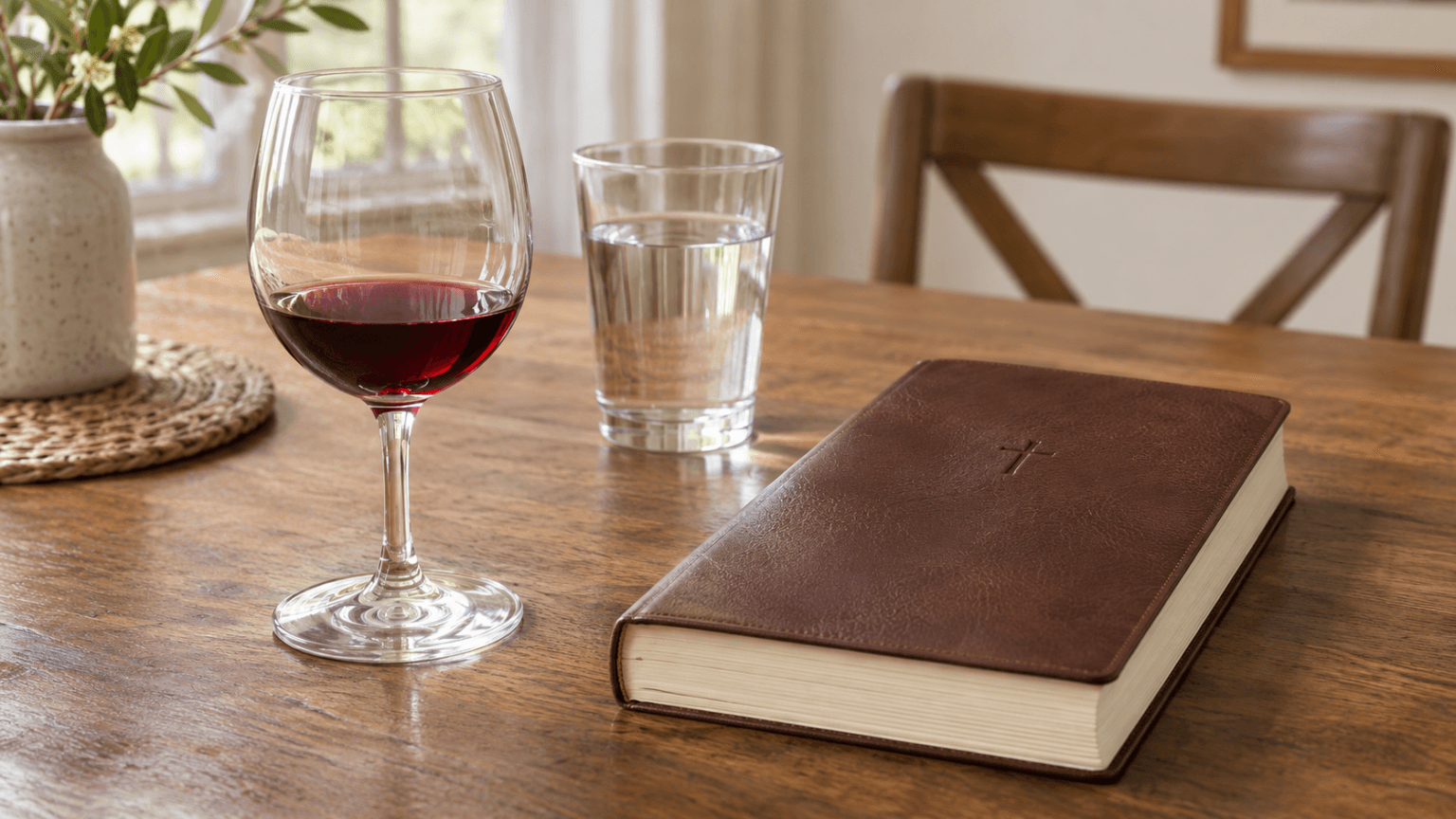
For some Christians, enjoying a glass of wine with dinner feels ordinary. For others, alcohol brings back painful memories of broken promises, family arguments, or someone whose drinking became impossible to ignore.
That helps explain why a simple question can carry so much weight: Can Christians drink alcohol?
The Bible does not forbid drinking alcohol, but it clearly forbids drunkenness. Christians may choose to abstain. They may also drink where doing so is lawful and consistent with responsible judgment, a clear conscience, and love for others.
In Taboo, available as a thank-you gift for a donation to Time of Grace, Pastor Mike Novotny explores that distinction. His teaching encourages readers to take both Christian freedom and God’s warnings seriously.
Jesus turned water into wine. Scripture also warns against alcohol’s misuse. Both truths matter when deciding whether, when, and why to drink.
Does the Bible say drinking alcohol is a sin?
Drinking alcohol is not inherently sinful.
In John 2:1–11, Jesus attends a wedding in Cana. When the wine runs out, he turns water into wine. Through this miracle, he reveals his glory, and his disciples believe in him.
Jesus is the holy Son of God. He would not provide something whose use was inherently sinful.
That does not mean every Christian should drink. It means Christians should be careful about making abstinence a command God has given everyone.
The same care applies in the other direction. Someone who drinks should not pressure another person to join them or treat abstinence as a sign of immaturity.
Christian freedom allows room for either choice. God’s commands guide how that freedom is used.
What does the Bible say about drunkenness?
Scripture speaks plainly:
“Do not get drunk on wine, which leads to debauchery. Instead, be filled with the Spirit.”
—Ephesians 5:18, NIV
The distinction is clear. Drinking alcohol and getting drunk are not the same thing, and permission for the first does not excuse the second.
In Taboo, Pastor Mike discusses how alcohol’s misuse affects both what people do and what they neglect to do.
Someone may speak cruelly, make reckless decisions, or start an argument. But harm can also come through neglected responsibilities: a child who needs attention, a spouse who needs support, or a commitment someone no longer feels capable of keeping.
God cares about those responsibilities. They remain important even when alcohol makes them easier to ignore.
The question therefore reaches beyond whether someone becomes visibly disruptive. Christians also need to consider whether drinking is interfering with clear judgment and faithful care for others.
How much alcohol can a Christian drink?
The Bible does not give one universal drink count for every person and circumstance.
That does not make its warning against drunkenness vague or optional. It calls for honest judgment.
Pastor Mike encourages readers to pay attention to how much they actually drink. Describing alcohol use as occasional or moderate can become a way to avoid looking closely at the pattern.
Consider the amount, strength, and frequency. Then ask what drinking is doing to judgment, behavior, and responsibilities.
Helpful questions include:
- Am I regularly drinking more than I intended?
- Am I trying to remain clearheaded, or trying to justify becoming impaired?
- Have people I trust noticed changes in my behavior?
- Am I hiding how much or how often I drink?
- Can I comfortably choose not to drink?
The purpose is not to discover the largest amount someone can defend. It is to make choices that honor God and protect the people nearby.
For more on applying Christian freedom thoughtfully, read Navigating the gray areas of life.
When should a Christian choose not to drink?
Sometimes abstaining is the wise and loving choice.
Someone may avoid alcohol because of personal history, health considerations, conscience, responsibilities, or concern for another person. No Christian needs to drink to prove that they understand freedom.
Romans 14:21 says:
“It is better not to eat meat or drink wine or to do anything else that will cause your brother or sister to fall.”
—Romans 14:21, NIV
Paul teaches believers to consider another person’s spiritual welfare when exercising their freedom.
That does not mean every personal preference becomes a rule for everyone else. It does mean love matters more than insisting on having a drink.
If alcohol has become difficult to control, abstaining may be an important part of receiving help. If someone nearby is struggling with alcohol, choosing another beverage can be a simple expression of care.
A person who orders water owes no apology. A Christian who drinks responsibly should not be condemned for something God has not forbidden.
Neither choice earns God’s favor. That comes through Jesus.
How can someone recognize a drinking problem?
Sometimes the people closest to someone notice a problem before the person drinking is ready to acknowledge it.
A spouse raises a concern. A friend mentions a change. Someone asks about the amount, and the conversation quickly becomes defensive.
It is possible to discuss Christian freedom while avoiding an honest examination of personal behavior.
Reasons to seek help include repeatedly drinking more than intended, hiding alcohol use, neglecting responsibilities, or continuing despite harm to relationships.
Those patterns deserve attention before a dramatic crisis occurs.
A pastor can provide spiritual care. A qualified health care professional can evaluate concerns about alcohol use and recommend appropriate support. Those forms of help can work together.
For someone who drinks heavily or may be physically dependent, medical guidance is important before abruptly stopping, because withdrawal can be dangerous.
Telling the truth is a meaningful first step.
What should a Christian do after getting drunk?
Begin by acknowledging the sin honestly.
If drunkenness involved lying, cruelty, unsafe behavior, or neglected responsibilities, those actions need attention too. Feeling embarrassed does not repair the harm someone else experienced.
But Christians do not need to hide until they have made themselves worthy of forgiveness.
Scripture promises:
“If we confess our sins, he is faithful and just and will forgive us our sins and purify us from all unrighteousness.”
—1 John 1:9, NIV
That promise rests on Jesus’ saving work. Confession does not purchase forgiveness. It brings sin before the God who has already provided the Savior.
Pastor Mike’s teaching in Taboo encourages honesty with God and with a fellow Christian who can help.
A faithful pastor or trustworthy Christian friend can listen, pray, speak God’s Word, and support concrete changes. Professional care may also be necessary when drinking has become difficult to control.
Another private promise does not have to become the entire plan.
The article on the buddy system offers more encouragement about Christian accountability.
Will God forgive someone for getting drunk?
Yes. Drunkenness is not beyond the forgiveness Jesus won.
That comfort belongs alongside God’s serious warning against sin.
In 1 Corinthians 6:9–11, Paul includes drunkards among those who will not inherit God’s kingdom. He then reminds the Christians receiving his letter that some of them had lived that way, but God had washed, sanctified, and justified them through Jesus and the Holy Spirit.
Their sin was real. God’s saving work was real too.
Jesus lived the perfectly holy life sinners have not lived. He never lost self-control or neglected his Father’s will. He died for sins that include drunkenness, deception, and harm done to others. Then he rose from the dead.
Through faith in him, forgiveness is received as a gift.
It is not earned through a certain number of sober days, successful counseling appointments, or a convincing display of shame.
His grace also gives believers a reason to resist sin. Forgiveness should never become an excuse to defend ongoing drunkenness or dismiss the people being hurt.
The Christian life includes repentance, receiving God’s forgiveness, and seeking help where it is needed.
Does forgiveness remove the consequences of drinking?
God’s forgiveness does not mean every earthly consequence disappears.
Trust may need to be rebuilt. Someone who has been hurt may need support and boundaries. Harmful patterns may require ongoing treatment and accountability.
A repentant person can accept those responsibilities without treating them as payments for salvation.
Jesus has already paid for sin. Caring for the people harmed is part of loving the neighbors God has placed in someone’s life.
That may mean listening without becoming defensive, apologizing for specific actions, and following through on changes over time.
For more on forgiveness and trust, read Am I expected to just forgive and forget?.
Christian freedom calls for love and self-control
Christians may drink alcohol. They may also abstain. Neither choice permits drunkenness or removes the responsibility to love others.
Consider the people nearby. Pay attention to responsibilities. Listen when trustworthy people express concern. Seek help when a pattern becomes difficult to control.
And when sin becomes clear, return to the Savior.
Jesus knows the truth about what happened. His forgiveness does not depend on convincing him it was harmless. It rests on the sacrifice he has already made.
Whether the choice is wine or water, Christians have the same calling: to honor God in daily life and care for their neighbors.
For more biblical guidance on difficult questions about faith and everyday life, explore Pastor Mike Novotny’s Taboo. Make a donation to Time of Grace and receive the book as a thank-you gift.